resist作名词和动词时的含义区别
词汇解析相关的内容,英语用法是很多考生和家长关心的事。resist作为英语中的常用词,很多同学只知道其中文意思是“抵抗”,但其实它还有名词用法和多种动词搭配。今天小编就来详细介绍resist这个词的各个方面,从名词到动词的各种用法都有覆盖,通过具体例句帮助大家理解掌握。感兴趣的朋友跟着小编继续往下看吧

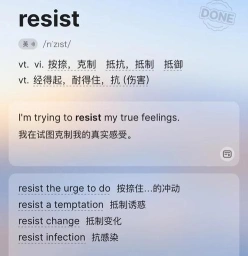
resist作名词时意思是“[助剂] 抗蚀剂;防染剂”,作及物动词时意思是“抵抗;忍耐,忍住”,作不及物动词时意思是“抵抗,抗拒;忍耐”。名词:resister;动词过去式:resisted;过去分词:resisted;现在分词:resisting;第三人称单数:resists。
1、resist sth./sb. 不受(某事物的)损害[影响]; 抗; 耐
She resisted her boyfriend.
2、resist (doing)sth. 不屈从(某事物或某人); 经得住;抵制做某事
He found it hard to resist buying these books. 他发现,见到这种书,要想不买是困难的。
3、can’t resist(doing)sth. 无法抵制做某事
I can’t resist eating delicious food.
4、resist表示从主观意识出发的意志“不屈服,忍住”,这时,后面常跟动名词,并多用于否定句中,意思是“不禁,忍不住”。
She cannot resist giving him advice. 她忍不住给他提建议。
resist的例句
1、Will they be able toresistthe temptation to buy?
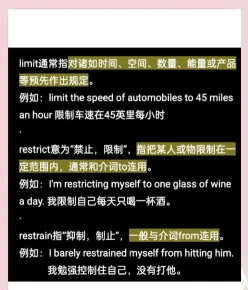
他们能抵抗得住购买的诱惑吗?
2、This place is a cultural back water that continues toresistprogress.
这个地方文化十分落后,仍然抗拒前进的步伐。
3、At this last bribery, Pinocchio could no longerresistand said firmly, “Very well.”
皮诺乔听了这最后的诱惑,再也忍不住了,坚决地说:“好吧。”
4、They wanted to recreate the ability of lotus leaves toresistwater.
他们想重现荷叶的抗水能力。
5、But Europeans shouldresista surrender to moral relativism.
但是欧洲人抵制屈服于道德相对论。
6、In these areas we can build special houses toresistearthquake shocks.
在这些地区,我们可以建造结构独特的房子来抵抗地震的冲击。